



Understanding McCune-Albright Syndrome
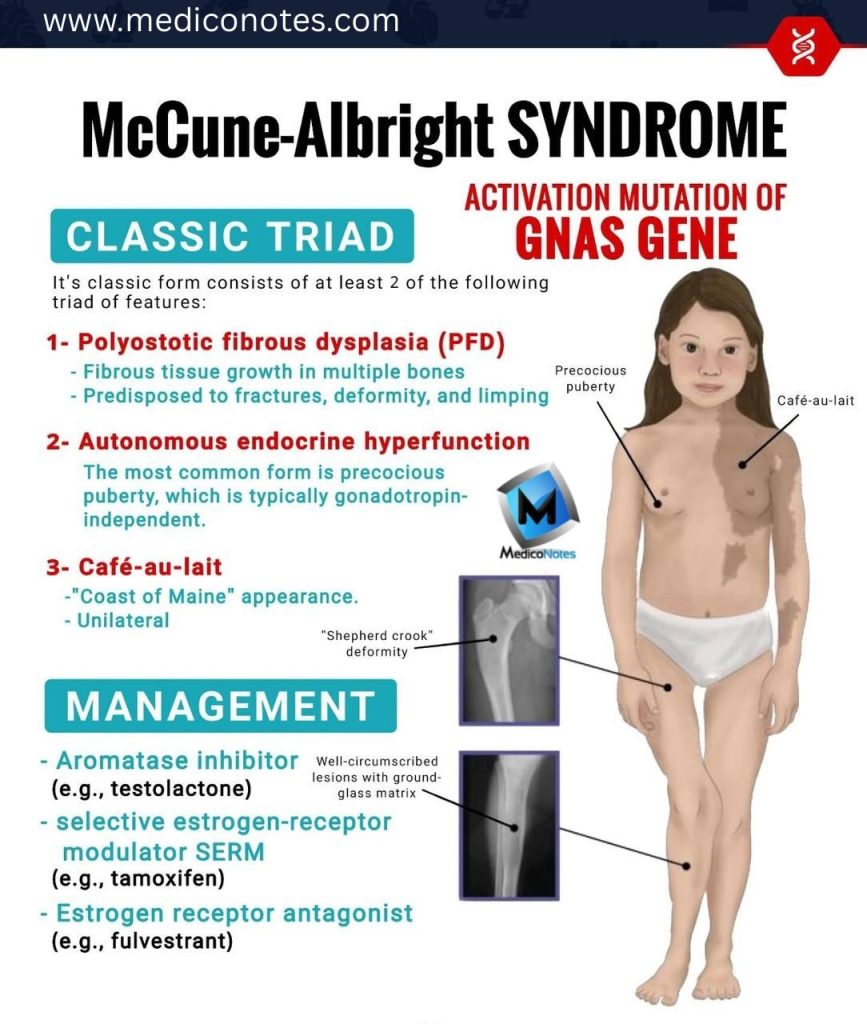
McCune-Albright Syndrome is a rare mosaic disorder caused by postzygotic activating variants in GNAS. Clinical manifestations can involve bone, skin, and multiple endocrine organs. In girls with MAS-associated peripheral precocious puberty, recurrent estrogen production can cause vaginal bleeding, accelerated growth and bone maturation, and reduced adult height.
Current management is individualized and may include medications intended to reduce estrogen synthesis or block estrogen effects, together with treatment of other endocrine and skeletal manifestations. Significant unmet need remains, particularly for durable control of estrogen-driven precocious puberty.
Atossa is evaluating (Z)-endoxifen as a direct estrogen-receptor-targeted therapy for MAS-associated precocious puberty. Direct administration of (Z)-endoxifen avoids the CYP2D6-dependent conversion required for tamoxifen and is designed to provide consistent systemic exposure. The clinical-development goal is to determine whether this pharmacology can safely control estrogen-driven manifestations and slow excessive bone-age advancement.
1 in 100,000 to 1 in a million
MAS affects live births worldwide
Signs and Symptoms Include:
- Flat, light-brown patches, often appearing on one side of the body
- In girls: vaginal bleeding or spotting can occur as early as infancy or toddlerhood
- Boys: early enlargement of the penis and testes, earlier growth spurts
- Bone fragility, asymmetry, bone pain, overactive glands
- MAS symptoms can vary from mild to severe, and may include light-brown birthmarks, fibrous tissue in the bones, and early onset of puberty.
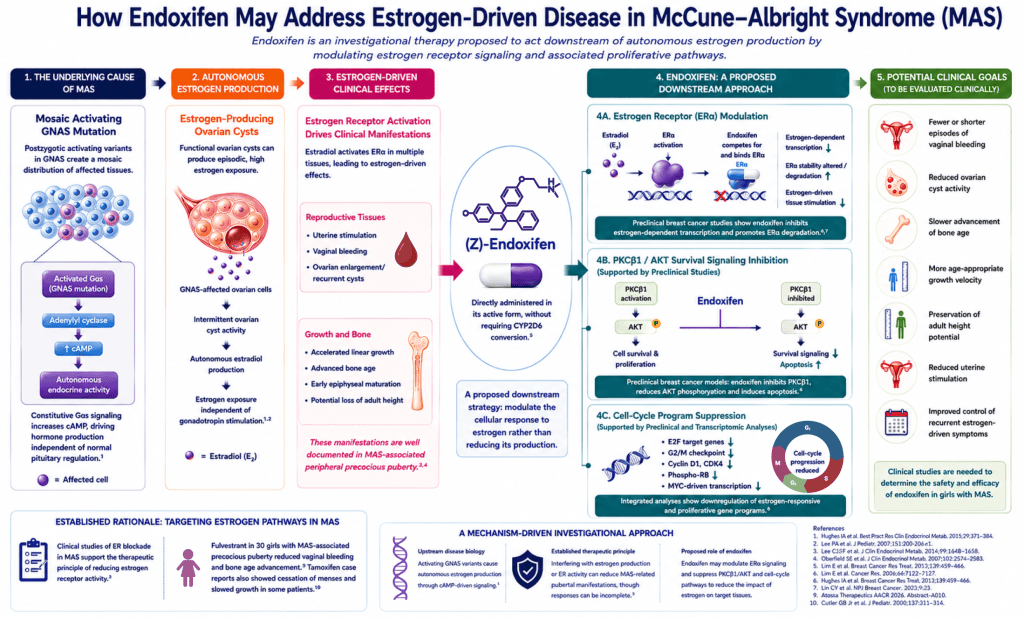
MAS Mechanism of Action (MoA)
Supporting MAS Patients Through Innovation
Current MAS treatments VS Atossa Therapeutics’ Endoxifen Program
Current treatments:
- Inconsistent results based on patient’s unique genetics
- Addresses symptoms rather than the core hormonal pathway
- Patients experience fluctuating hormone levels as the body develops resistance to standard inhibitors
Atossa Therapeutics’ Treatment Goals:
- Establish (Z)-endoxifen as an effective hormone blocker intended to treat precocious puberty in female MAS patients
- Develop treatments aimed at slowing or preventing bone maturation associated with MAS, helping patients achieve normal height ranges
- Bypassing the liver’s conversion process ensures every patient gets a predictable therapeutic dose regardless of genetics