



Follow the Estrogen
Atossa’s development strategy begins with a simple question: where might (Z)-endoxifen’s effects on estrogen-receptor and related signaling pathways address an important unmet medical need?
The clinical foundation is in breast cancer, where estrogen-receptor biology is well established. Atossa is using insights from that work to evaluate selected rare diseases in which estrogen signaling or related pathways may contribute to disease manifestations.
This mechanism-led approach allows the company to evaluate multiple indications around a single proprietary molecule while applying indication-specific clinical and regulatory standards to each program.

Why Endocrine Therapies Matter
Approximately 70-80% of breast cancers are estrogen receptor-positive (ER+), meaning tumor growth is driven by estrogen signaling.
While existing endocrine therapies such as tamoxifen and aromatase inhibitors have improved outcomes, limitations remain, including variability in metabolism, side effects, and resistance over time.
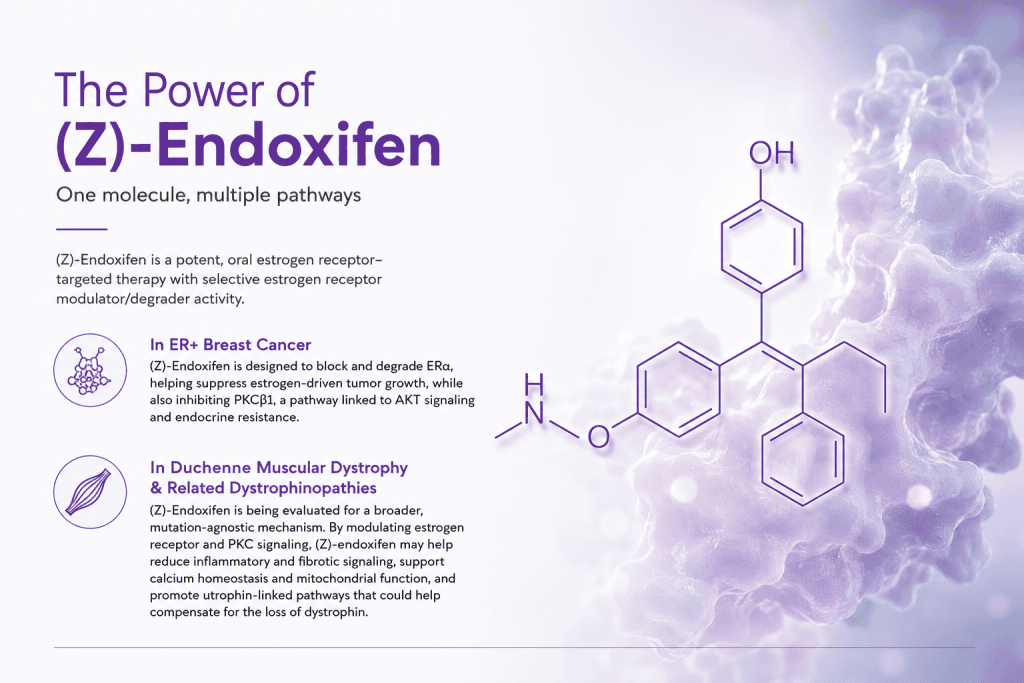
Atossa Therapeutics is advancing a next-generation endocrine approach centered on (Z)-endoxifen, designed to:
- Act directly on the estrogen receptor
- Provide more consistent drug exposure
- Maintain activity across diverse patient populations
This mechanism-driven strategy reflects our comprehensive platform approach that originated in oncology with the potential to evolve across a range of estrogen-driven conditions.
A Platform Approach to Estrogen-Driven Disease
Following estrogen biology is our foundation.
Insights gained in breast cancer are helping inform research across other estrogen-influenced conditions, including rare diseases with significant unmet need.
Our approach enables a more connected understanding of disease biology, and a door open to broader therapeutic possibilities.