



Understanding Duchenne Muscular Dystrophy
DMD is caused by pathogenic variants in the DMD gene that result in absent or deficient dystrophin. Progressive muscle damage leads to weakness and, over time, cardiac and respiratory complications. Advances in multidisciplinary care have improved outcomes, but DMD remains a serious, life-limiting disease with substantial unmet need.
Atossa is evaluating (Z)-endoxifen as a potential mutation-agnostic therapy—that is, an approach whose activity would not depend on a specific DMD genetic variant.
200,000+
Estimated people living with DMD worldwide
15,000
Estimate people living with DMD in the U.S
12
Many children with DMD use wheelchairs by the age of 12
20
Most patients experience shortened lifespans and may pass away in their 20s
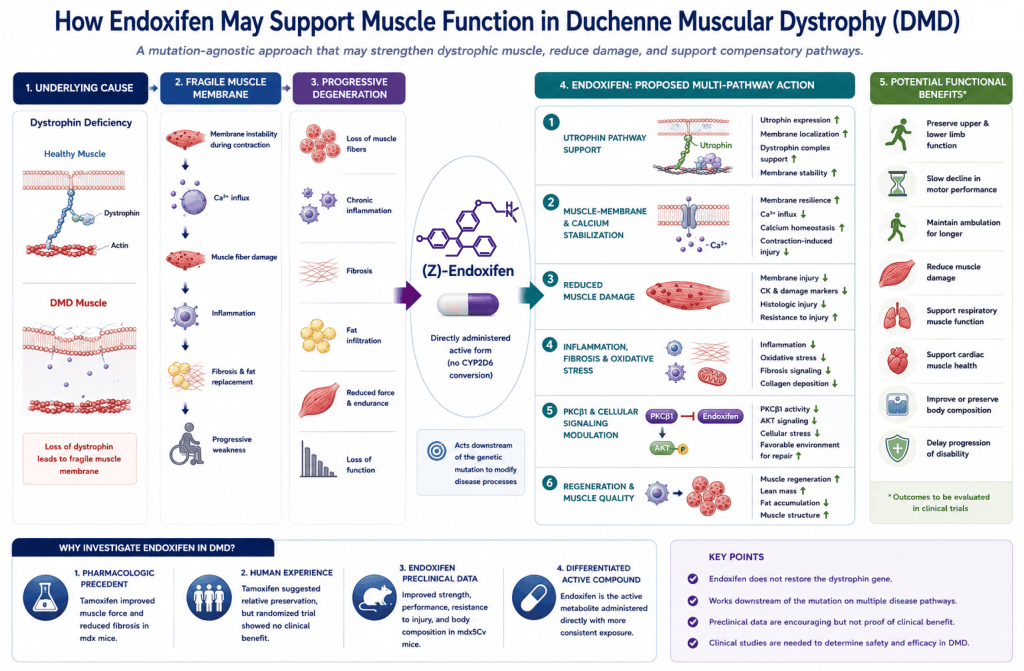
DMD Mechanism of Action (MoA)
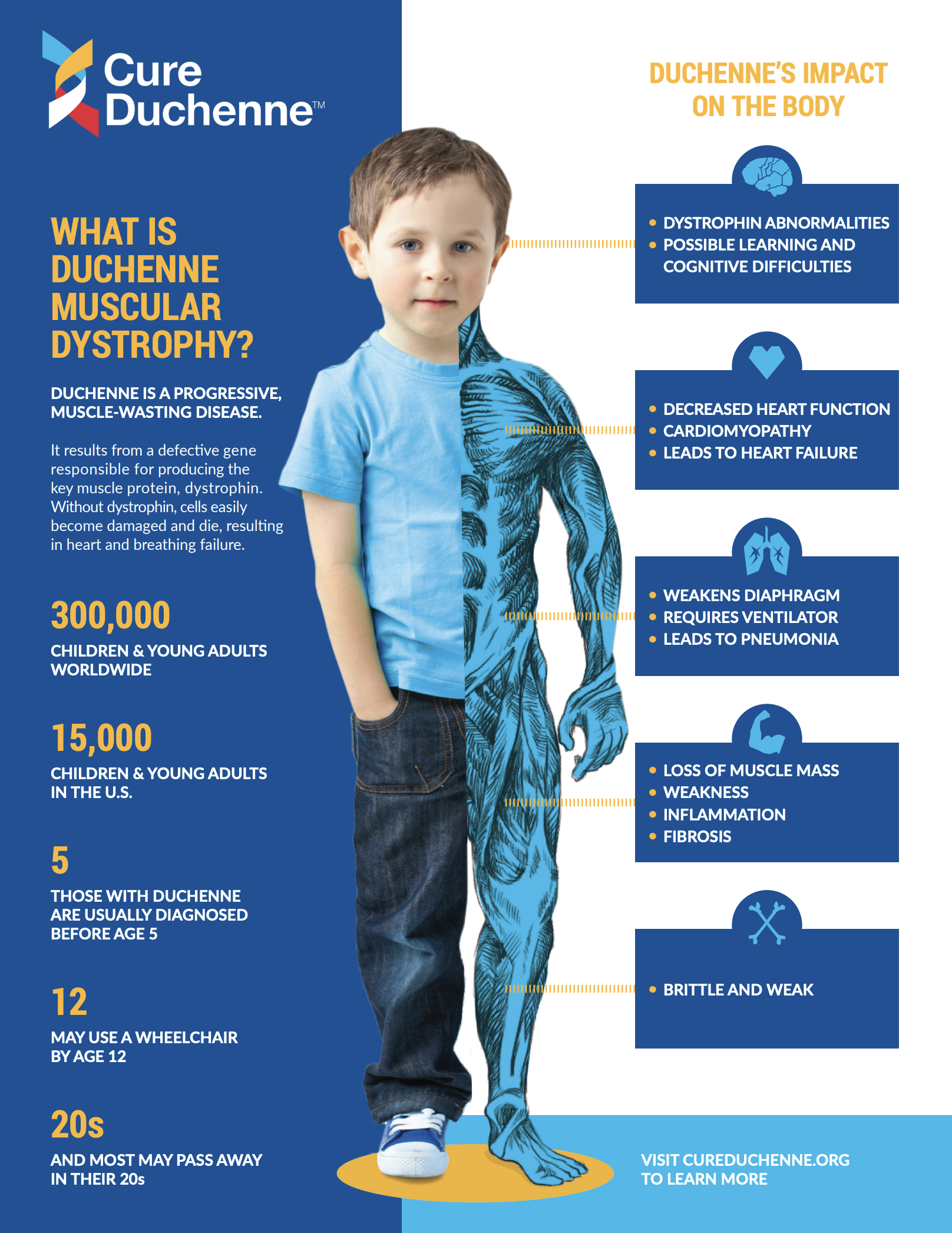
Infographic ©2025 CureDuchenne
Signs and Symptoms Include:
- Delayed motor milestones and difficulty running or climbing
- Lose the ability to walk in their early teens, on average
- May develop serious cardiac and respiratory complications as the disease progresses
Supporting DMD Patients
Current DMD Treatments VS Atossa Therapeutics’ Endoxifen Program
Currently available treatments:
- Slow disease progression but are associated with several significant side effects
- Current gene-targed approaches are only available to patients with certain genetic variants
- Supportive care could include cardiac and respiratory management
The program currently includes:
- Preclinical studies in dystrophin-deficient models and muscle biology;
- Evaluation of effects on strength, muscle injury, inflammation, fibrosis, and utrophin-related pathways;
- Nonclinical safety and toxicology work to support clinical development; and
- Development of clinical protocols to evaluate dose, exposure, safety, biomarkers, and preliminary activity in people with dystrophinopathies.
In preclinical DMD models, Atossa has reported improvements in measures including muscle strength and markers of muscle injury. These findings have not yet established clinical benefit in patients.